Outdoor & Seasonal · 1–2 hours · Free
How To Clean Gutters Safely
Clogged gutters are one of the most predictable sources of serious home damage — water overflows behind the fascia, soaks into the soffit, rots the roofline framing, and runs down the foundation wall into the basement. A twice-yearly cleaning prevents all of it. The job isn't complicated, but ladder safety is non-negotiable. This guide covers the right setup, the right tools, and the inspection steps that turn a routine cleaning into an early warning system.
-
Know When to Clean
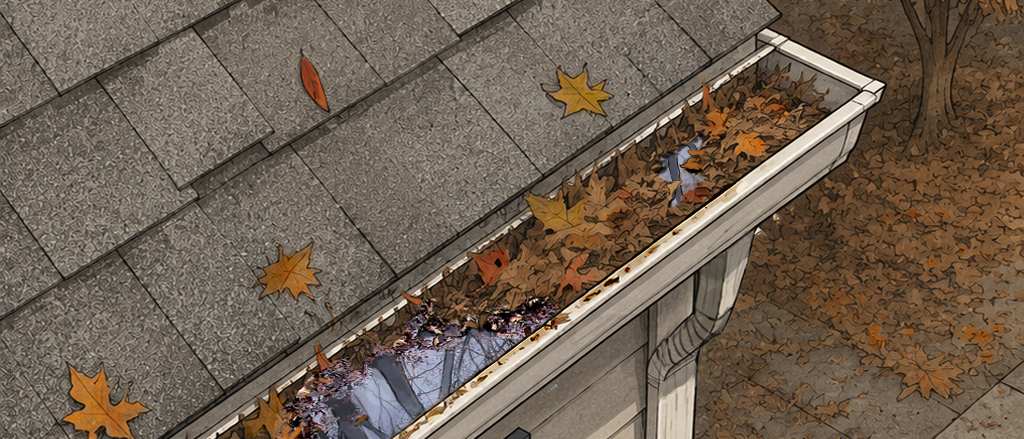
Timing your gutter cleaning correctly means less work and better protection. Plan for two passes per year:
- Late spring (April–May) — after trees finish releasing seeds, pollen, and helicopter pods. Maple, sweet gum, and oak debris can completely fill gutters in a single season.
- Late fall (November) — after the last deciduous trees on your property have dropped. Cleaning too early in fall just means a second trip up the ladder after the remaining leaves come down.
- Late summer (August) — add a third pass if you have pine trees overhanging the roof. Pine needles accumulate fast and pack tightly enough to block even large downspouts.
Why it matters: Clogged gutters overflow and send water behind the fascia boards and into soffits — the most common cause of roofline rot and a major contributor to basement moisture. Gutters cost $5–$15 per linear foot to replace; the water damage they prevent can run into the tens of thousands.
-
Set Up the Ladder Safely
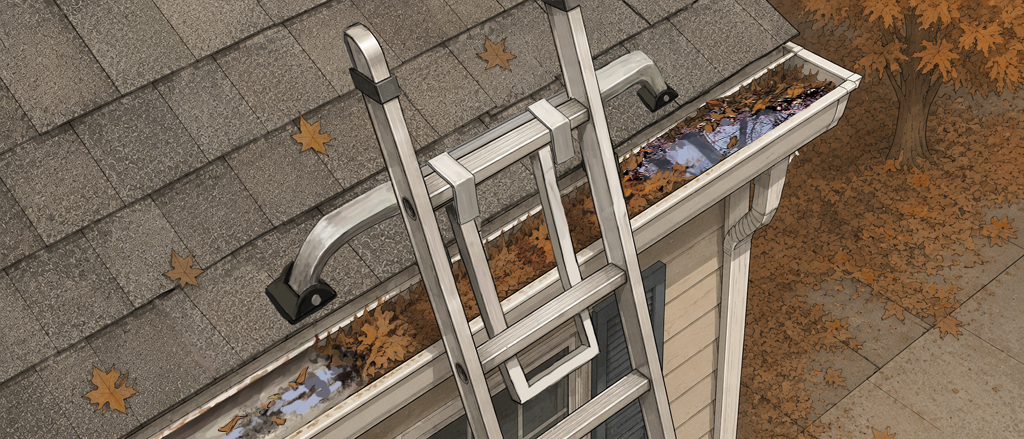
More gutter-cleaning injuries come from ladder falls than from any other part of the job. Getting the setup right is the most important step.
- Use the right ladder — an extension ladder tall enough that you never need to stand on the top two rungs. For a standard single-story home, a 20-foot ladder is usually sufficient. For two stories, a 24-foot minimum.
- Use a ladder stabilizer (standoff brackets) — this is the single most important safety addition. It rests the ladder against the roof decking or the fascia board, not against the gutter itself, which can bend under load or pull the gutter off the wall.
- Set it on firm, level ground — use a ladder leveler on sloped ground. Never prop the base on bricks, lumber, or a bucket. The base should be set out 1 foot for every 4 feet of height.
- Have someone spot the base — a second person standing at the base of the ladder dramatically reduces tip risk, especially when you're moving the ladder frequently around the perimeter.
Never lean the ladder against the gutter. K-style aluminum gutters, which are on most homes, can flex and fail under ladder load — especially older ones with weakened hangers.
-
Gear Up
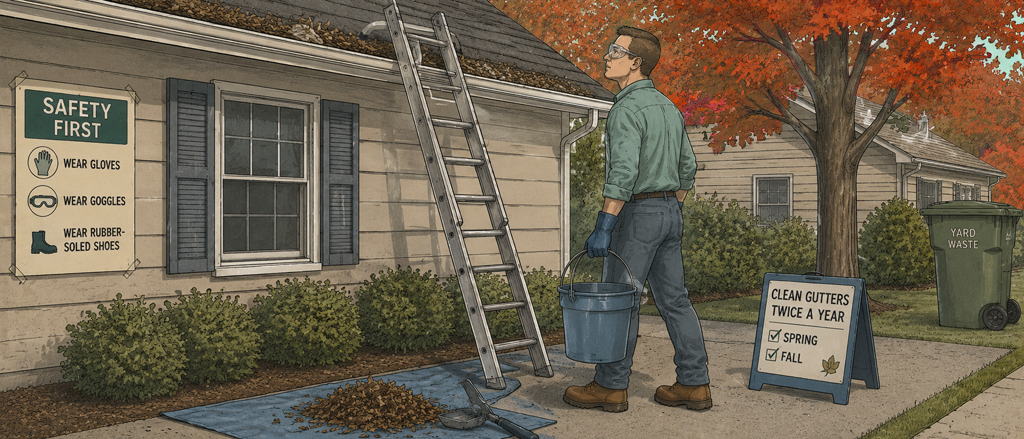
Gutter debris isn't just leaves — it's decomposed organic matter, shingle granules, bird droppings, mold, and sometimes wasp nests. The right gear makes the job safer and less unpleasant.
- Waterproof work gloves — protect against sharp debris, mold, and biological material. Nitrile-coated or rubber gloves work well.
- Safety glasses — debris falls when you're scooping, and roof shingle granules at eye level are a real hazard.
- Rubber-soled shoes — traction matters on wet grass and on ladder rungs.
- A bucket clipped to the ladder — use an S-hook or a specialized ladder bucket hook to keep a container at hand for debris rather than dropping everything to the ground. A tarp below works too if you prefer to work faster and clean up afterward.
Tip: If you discover a wasp or bee nest inside a gutter, stop and treat it with a wasp spray at dusk (when they're least active) before attempting to clean that section. This is a common surprise in gutters that haven't been cleaned in a season or more.
-
Scoop Out the Debris
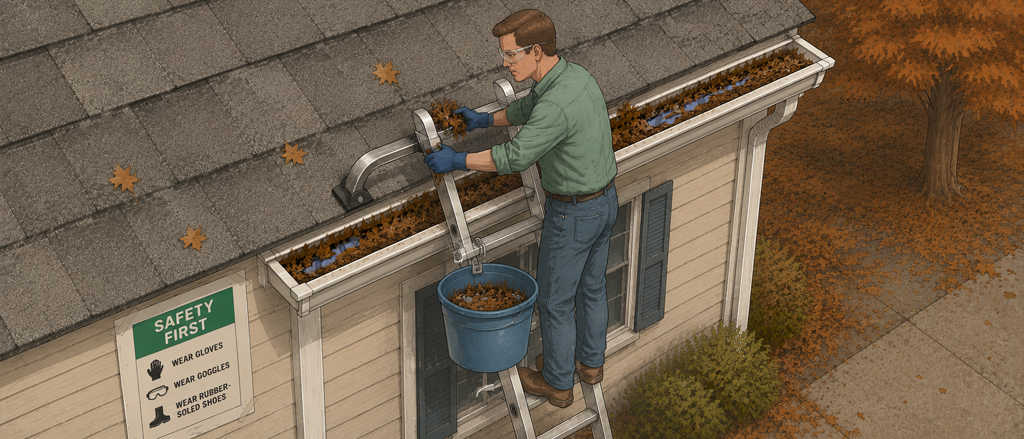
Work methodically around the perimeter, moving the ladder every 3–5 feet rather than reaching sideways — most falls happen during an overreach.
- Start near a downspout and work away from it — push debris toward open gutter sections, not toward the outlet where it can compact and create a blockage.
- Use a gutter scoop or garden trowel — a plastic gutter scoop (about $5) is shaped to fit the gutter profile and won't scratch the finish. A garden trowel works for stubborn packed debris.
- Gloved hands for the finish pass — once bulk debris is out, a quick sweep with a gloved hand clears the fine material that tools miss near corners and end caps.
- For a one-story home, an extension gutter cleaning tool that attaches to a wet/dry vacuum or leaf blower lets you work from the ground on some sections — useful if you're uncomfortable on a ladder.
-
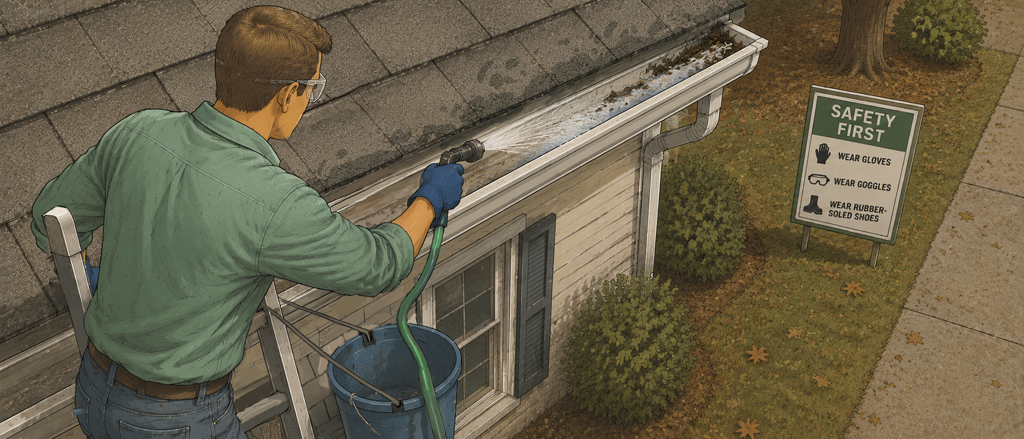
Flush the Gutters and Downspouts
Once the bulk debris is out, a hose flush does three things at once: clears fine residue, confirms the pitch is correct, and tests that downspouts are draining.
- Flush from the far end toward the downspout — run a garden hose with a spray nozzle from the highest end of the gutter run toward the downspout outlet. Water should drain steadily with no pooling.
- Pooling water means the gutter has sagged or the pitch has shifted — it will need re-hanging at that section to drain properly.
- Clogged downspout — if water backs up at the top, insert the hose into the downspout opening and blast water downward at full pressure. For persistent clogs, a plumber's snake or a pressure washer with a downspout attachment will break up compacted debris.
- Confirm water discharges from the downspout extension away from the foundation — at least 6 feet away and angled so it drains away from the house, not back toward it.
Tip: Watch where the downspout discharges at ground level. If it's pooling against the foundation, add a downspout extender or a splash block. Foundation water intrusion is expensive to fix and almost entirely preventable.
-
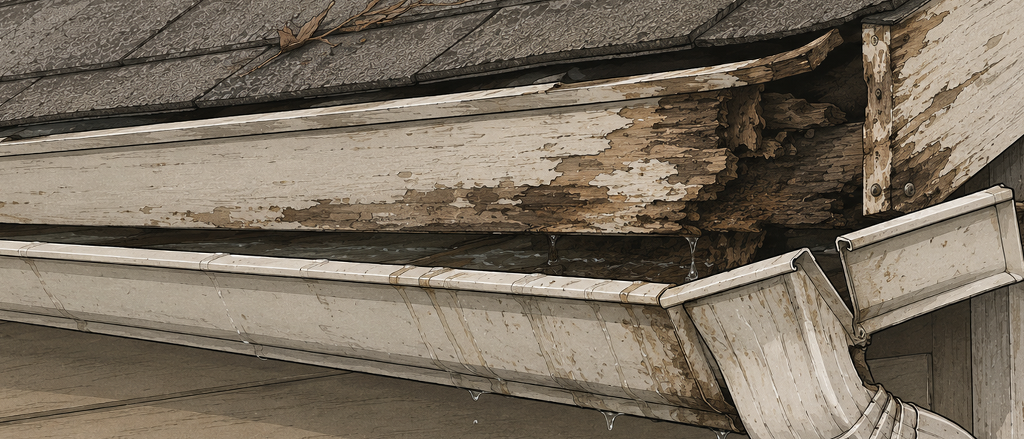
Inspect While You're Up There
You're already on the ladder — take 5 extra minutes to spot problems while they're still minor. Look for:
- Sagging sections — gutter hangers pull loose from fascia over time, especially after ice load in winter. A sagging section won't drain and will overflow at that point.
- Gaps at joints and end caps — look for daylight or rust staining on the fascia below a joint. Gaps let water run directly behind the gutter and into the fascia.
- Fascia board condition — if the wood behind the gutter is soft, discolored, or visibly rotting, the gutter has been leaking there for a while. This is a repair that needs prompt attention before it spreads to the rafter tails.
- Shingle granules in the gutter — a small amount is normal. A large accumulation, especially from a younger roof, is a sign the shingles are degrading prematurely. Worth noting and watching.
- Downspout placement — confirm outlets are at least 6 feet from the foundation, directed away from the house.
Tip: Take a photo of anything that concerns you while you're at eye level with it. It's much easier to describe or show a contractor a clear photo than to try to remember what you saw from the ground.
-
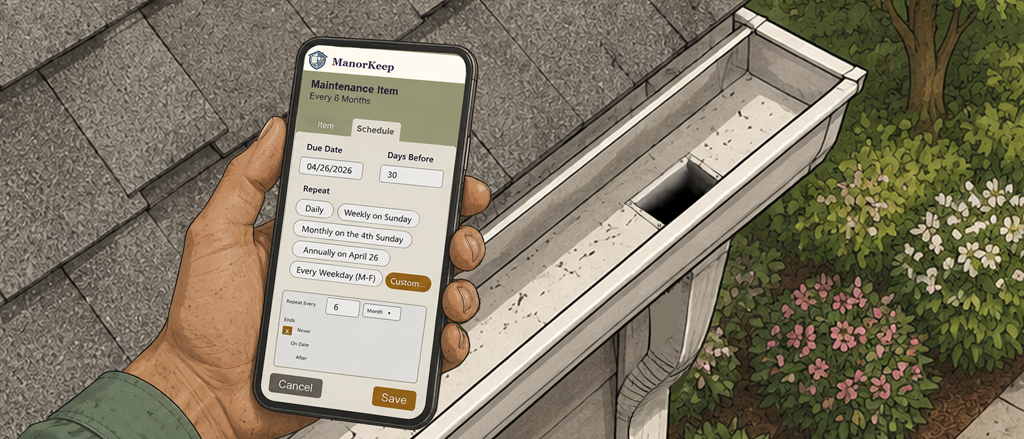
Log It and Set a Twice-Yearly Reminder
Log today's cleaning with any notes on what you found — debris volume, downspout condition, any damage spotted. Then schedule the next two reminders:
- Spring: Late April or May, after trees finish releasing seeds and pollen.
- Fall: November, or after the last deciduous trees on your property have fully dropped. Cleaning before all the leaves are down means a second trip.
- Pine trees: Add a late-August reminder for a quick pass — needles accumulate significantly between the spring and fall cleans.
Tip: If you dread the job or your home has multiple stories with a complex roofline, this is one task worth pricing out with a professional service. A professional cleaning typically runs $100–$250 and includes a basic inspection. Paying for it once a year is far cheaper than a single fascia repair or basement water mitigation.
Quick Reference
Home maintenance, handled
Stop letting predictable damage sneak up on you
ManorKeep tracks every seasonal task — gutter cleanings, filter changes, water heater flushes — with reminders before they're due and a record of everything that's been done.
Join the early access list
Be the first to know when ManorKeep launches — and lock in free early access.
Get notified at launchNo spam. No credit card. Just an update when we're ready.